
Voltage Translation FPGA Design and EDA Flow for Countering Obsolescence
Defense systems must integrate legacy electronics (often running at 3.3 V–5 V and older packages) with modern subsystems (≈1.2 V–2 V). Lack of flexible, trusted, U.S.-fabricated devices that can programmatically bridge these voltage domains drives cost, schedule risk, and obsolescence pain......Continue reading→

Circuits and Architectures for Low-Power Transprecision Computing on Edge Devices
In resource-constrained edge devices, executing applications locally is increasingly necessary, as transmitting data to centralized servers adds latency, energy overheads, and security risks. To mitigate these issues, edge platforms are evolving to support diverse workloads......Continue reading→

Early Crop Anomaly Detection with Expert Feedback
Farmers possess significant knowledge about crops, their distress, and diseases. However, it is labor intensive for farmers to notice all the plants at all times. There needs to be an automated approach to discover crop......Continue reading→
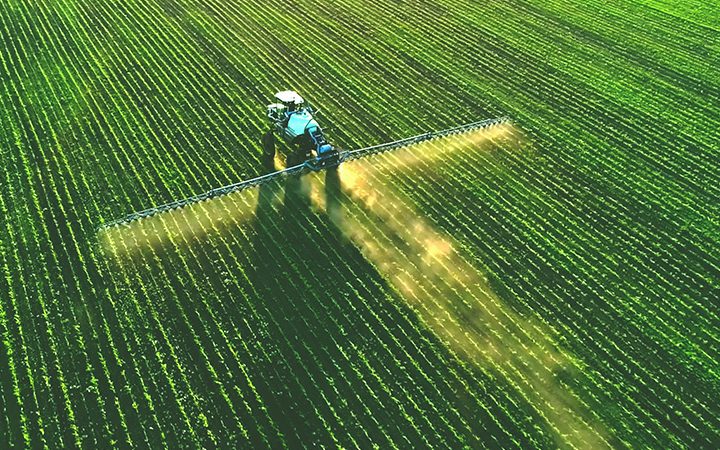
Improving the Accuracy of Ultrasound-based Canopy Volume Estimation via Correlation Detection Methods
As an important application in precision agriculture, variable-rate spray helps increase yield, reduce cost, and minimize environmental contamination. Canopy volume measurement units are critical sensing components in variable-rate spray systems.
Continue reading→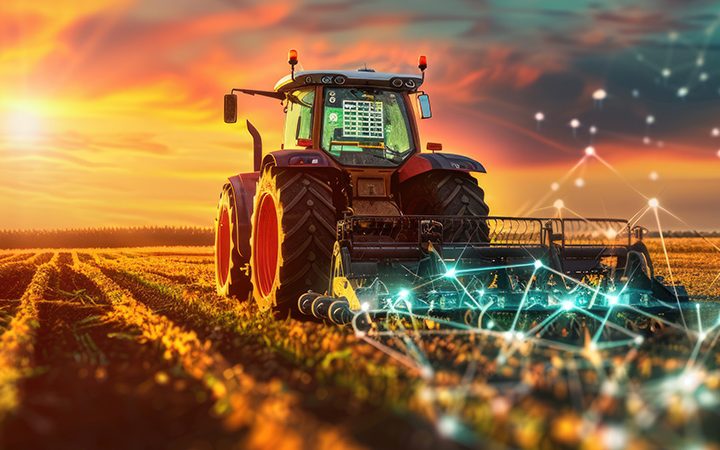
Data-Driven Design Exploration of Modular and Versatile HW/SW Platform for Agriculture Technology
This project aims to explore the design space of a cost-effective, versatile, and modular hardware/software (HW/SW) platform for supporting a diversity of requirements in agriculture technology (AgTech) through monitoring, sensing, controlling machinery, and communication.
Continue reading→
Radiation Hardened Intelligent Readout ASIC for Nuclear Physics Experiments
The DoE Office of Nuclear Physics seeks new developments in detector electronics with significantly improved energy, timing resolution, sensitivity, dynamic range (DR), and signal-to-noise ratio (SNR).
from Radiation Hardened Intelligent Readout ASIC for Nuclear Physics Experiments
Continue reading→
Toward an Enablement of DNN on Edge Devices
Deep neural networks (DNNs) show promise in applications like agriculture, automotive, and construction machinery autonomy. DNNs can adapt to variations in lighting, background clutter, etc., making them robust in real-world scenarios where captured images are of a diverse quality due to different operating and environmental conditions.
from Toward an Enablement of DNN on Edge Devices
Continue reading→
Communication Planning for Safe Human-Robot Interaction
The long-lasting idea of human-robot cooperation has thrived remarkably in the last decade and cobots are being employed increasingly to provide diversified services which has led to more and more human-robot co-working environments.
from Communication Planning for Safe Human-Robot Interaction
Continue reading→
3D Processing-in-Memory Architectures for Learning and Inference
Deep neural networks (DNNs), a prominent framework in machine learning, are characterized by their high computational and energy demands, often involving billions of operations and large working datasets during training.
from 3D Processing-in-Memory Architectures for Learning and Inference
Continue reading→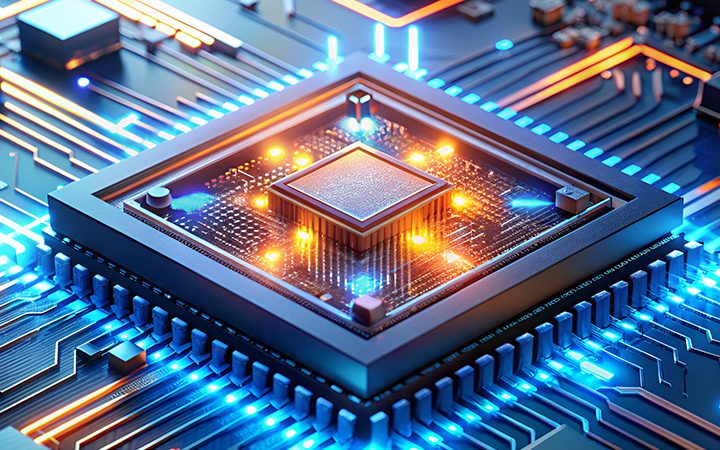
In-Field Circuit Monitoring with Machine Learning
In Year 1, the efforts in the project focused on developing a deep learning-based approach to identify early delay defects in ICs using responses captured at the internal Test Points (TP).
from In-Field Circuit Monitoring with Machine Learning
Continue reading→
AI-assisted Characterization and Reduction of Point Cloud Noise
Point clouds are discrete data points representing 3D shapes and objects in space. Thanks to its ability to accurately describe complex spatial information, point cloud emerged as an attractive technique for various applications, including building modeling, infrastructure mapping, autonomous driving, robotics, virtual reality, etc.
from AI-assisted Characterization and Reduction of Point Cloud Noise
Continue reading→


